



The number of people I’ve talked to this week that have told me stories of being suicidal and either asked for my help via poetry or told me poetry saved their lives this week alone.
Six.
For this year’s workshop I’ve been teaching the kids something called Affect Labeling. When trauma happens it activates in our amygdala. That’s our lizard brain. The one that is on high alert trying to keep us safe.
When you write something traumatic down it moves from your amygdala to your prefrontal cortex, which is where we process. This allows your nervous system to regulate and your cortisol to lower.
I don’t teach poetry as a literary technique. I teach it as a survival tool.
You feel alone? Read poetry. You’ll find that you’re so far from alone.
You feel anxious, depressed, or unmotivated? Write and move that energy through your brain and body.
Privilege and circumstance have always dictated genres of poetry. Poetry forms are often born out of response to the poet’s environment. From pastoral to blues to beat to slam.
To write about the oppression and suppression you feel is not to declare victimhood. It is Affect Labeling. It is how humans who come from struggle, trauma, and oppression have always processed it.
Some of the olders have a hard time acknowledging the weight that the young ones are under because that would mean taking accountability for creating some of that weight. That’s always what causes generational gaps.
People writing their feelings out saves lives.
Literary devices help us communicate with others.
Poetry forms expand our literary prowess.
Without the first two, the third doesn’t matter.
That’s why I write and teach the way I do.
That’s why poetry.
Thank you for Poetry Week Sacramento.
Some of us are still here because of it.
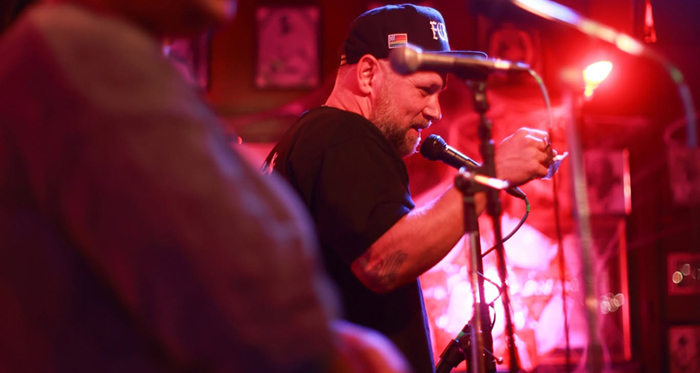
📸 Katy Karns @glowstudio_sac
—andru defeye
Flommist Andru Defeye is the Emeritus Poet Laureate of Sacramento. Copyright © 2026 Andru Defeye.
MOR D’ARTÍCULOS MOR FLOMM !
READ SOME RELATED DER TUNG POSTS :
 flashbacks
 ‘most the time it ain’t the white they arrest, so get it right’
 sac poetry day: we’re documenting this generation of sacramento voice
 andru x ted: the poetics of ice cream and fragile masculinity
 sac poetry week oct 20 thru 26 – it’s all fire
 i never considered myself a real poet
 paths become trails
 we put poets on billboards in sacramento
PLEASE SUPPORT FLOMM
DONATIONS DISCREETLY ACCEPTED