




There has been an eclipse or two lately — –
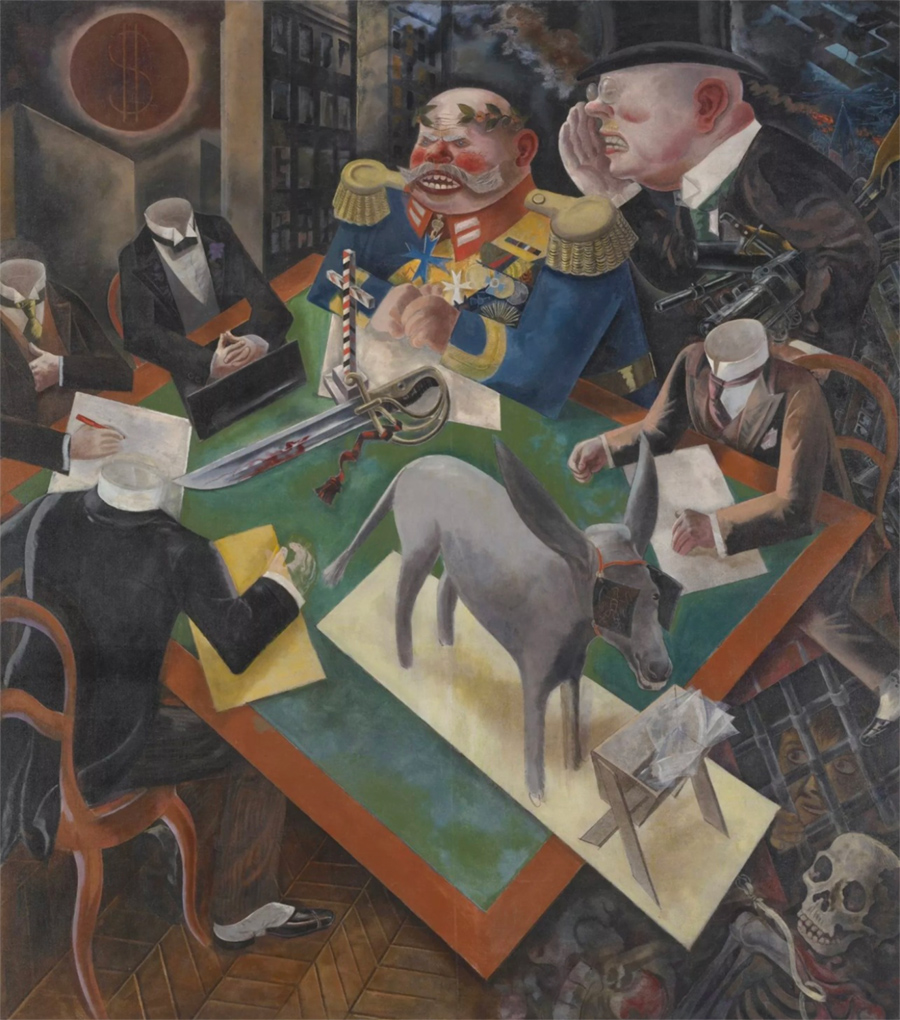
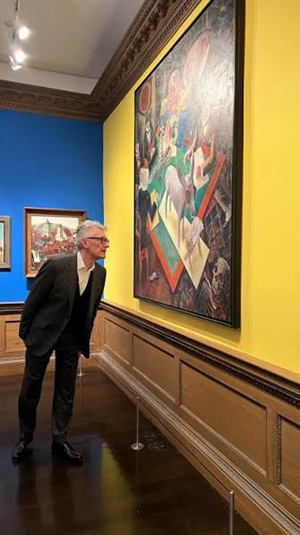
always a good excuse to look at George Grosz’s Eclipse of the Sun (1926).
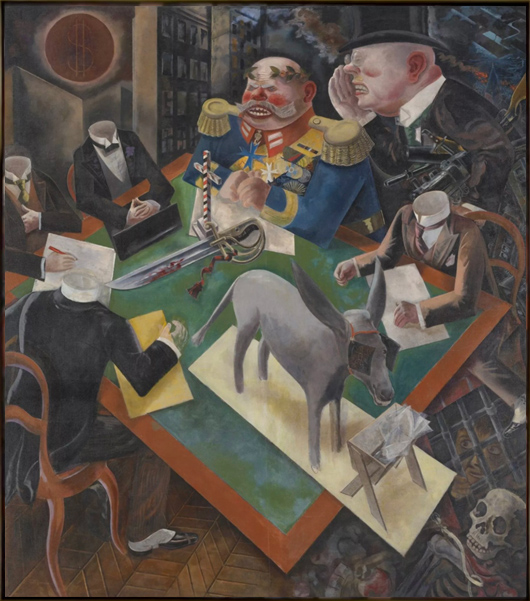
This exceptionally dense painting is a harsh indictment of the political and economic realities of Weimar Germany, particularly the economic interests dominating the new regime.
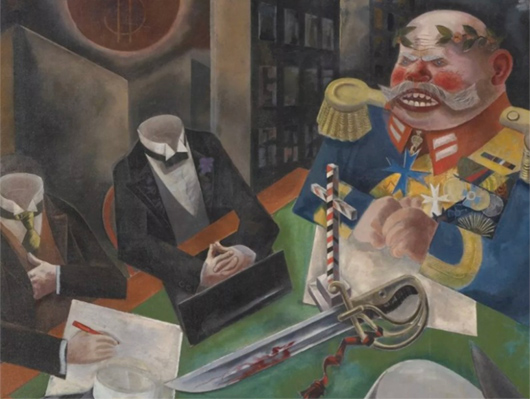
At the centre sits President Paul von Hindenburg, recognisable by his moustache, military uniform and medals.
He bares his teeth beneath an ironic laurel wreath. In front of him are a bloodied sword and funerary cross, referring to his role in the First World War and its human cost.
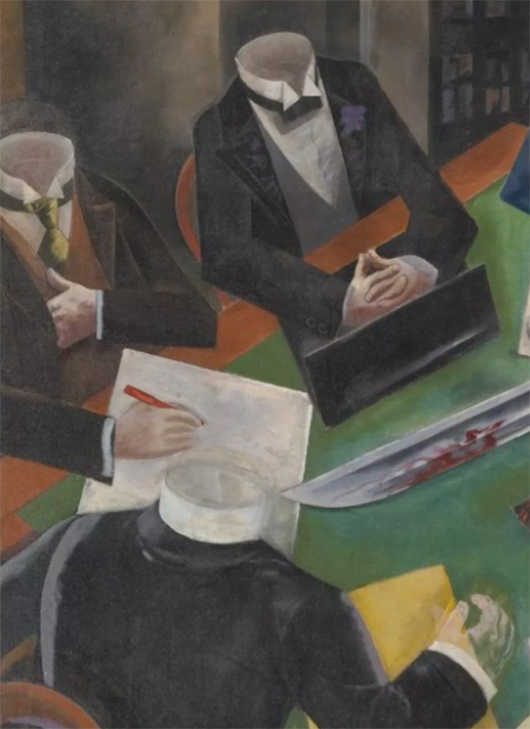
Around the table sit four headless financiers.
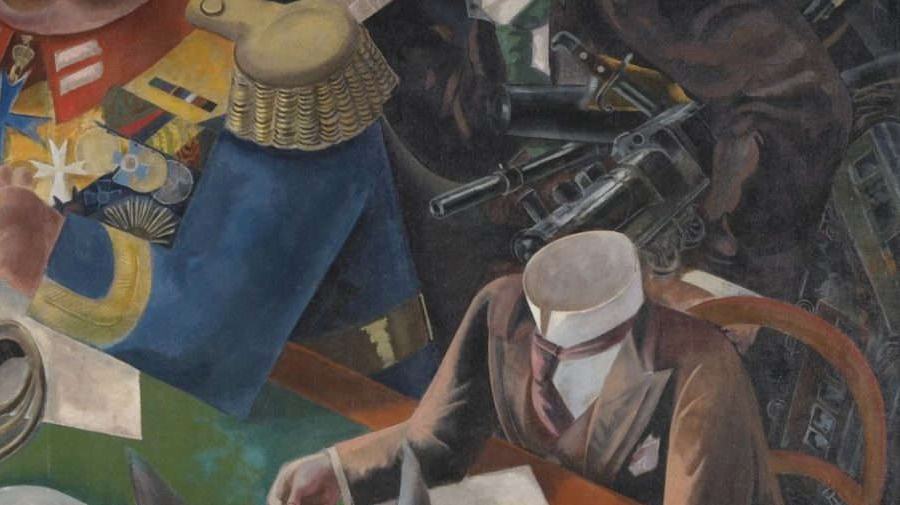
A corpulent industrialist in a top hat, carrying miniature weapons and a train, whispers into Hindenburg’s ear – suggesting that those in power are simply acting on the interests of capital and the military.
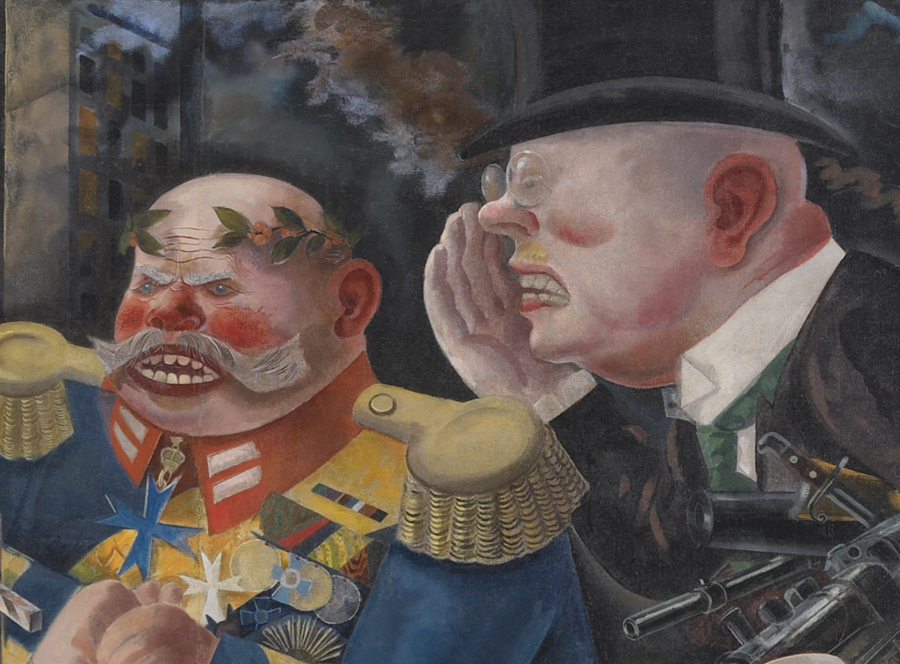
Behind them, a city burns.
A blindfolded donkey, wearing the German eagle on its blinkers, eats papers from a trough while balancing on a board tied to a skeleton – interpreted as the German people, accepting whatever is put in front of them.
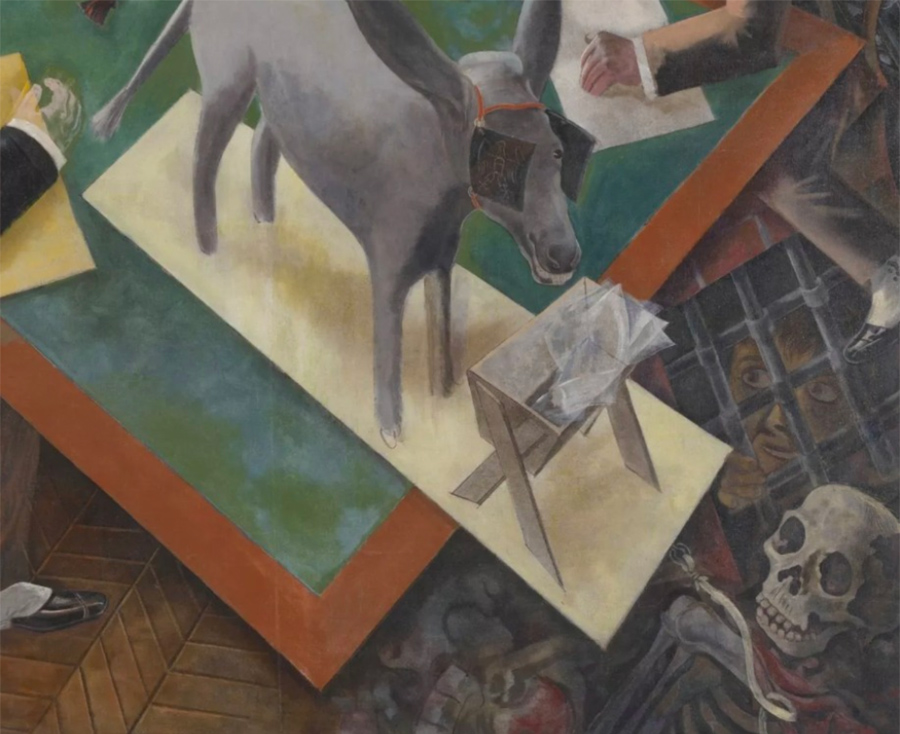
To the right, a prisoner peers through bars beneath one of the financiers.
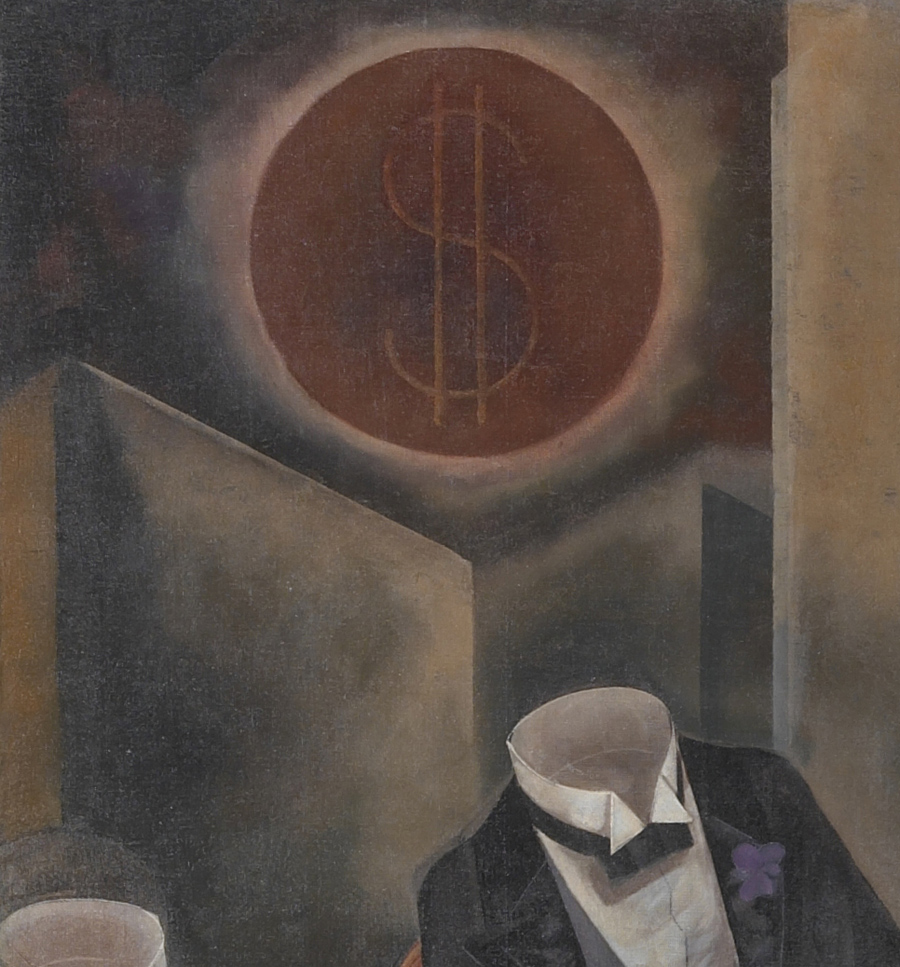
And above the whole scene, the sun is eclipsed by a giant dollar sign, referring to American financial investment in Germany after the First World War.
—julija svetlova
Flommist Julija Svetlova is an art historian, freelance researcher and a founder of Neja’s Art Walks, a bespoke provider of art and history-related tours and experiences in London. Julija previously worked as a collection research assistant at the Tate. Copyright © 2026 Julija Svetlova. Images via Heckscher Museum of Art; bottom image via Neue Gallery NY.
MOR D’ARTÍCULOS MOR FLOMM !
READ SOME RELATED DER TUNG POSTS :




PLEASE SUPPORT FLOMM
DONATIONS DISCREETLY ACCEPTED